Fostering Social Development
Domain Introduction
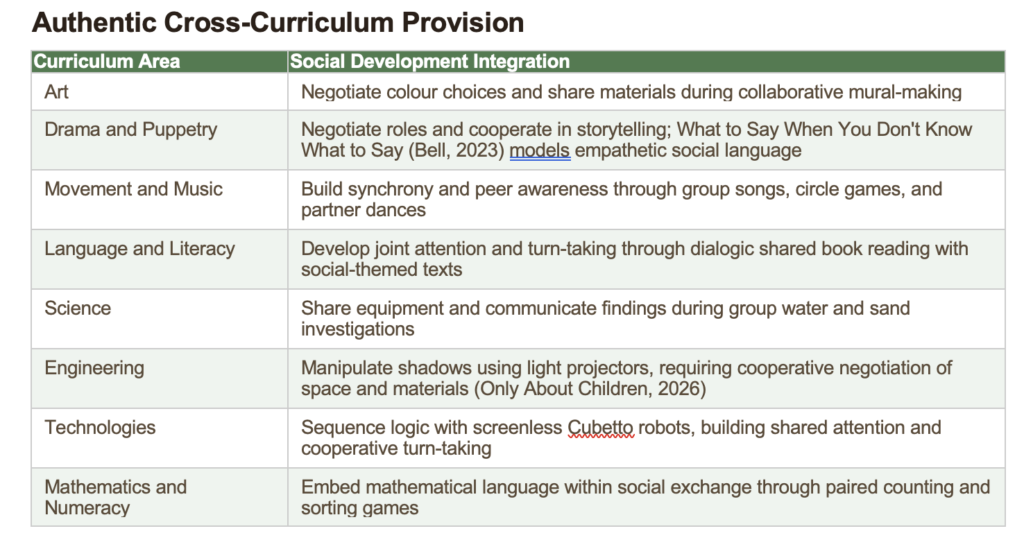
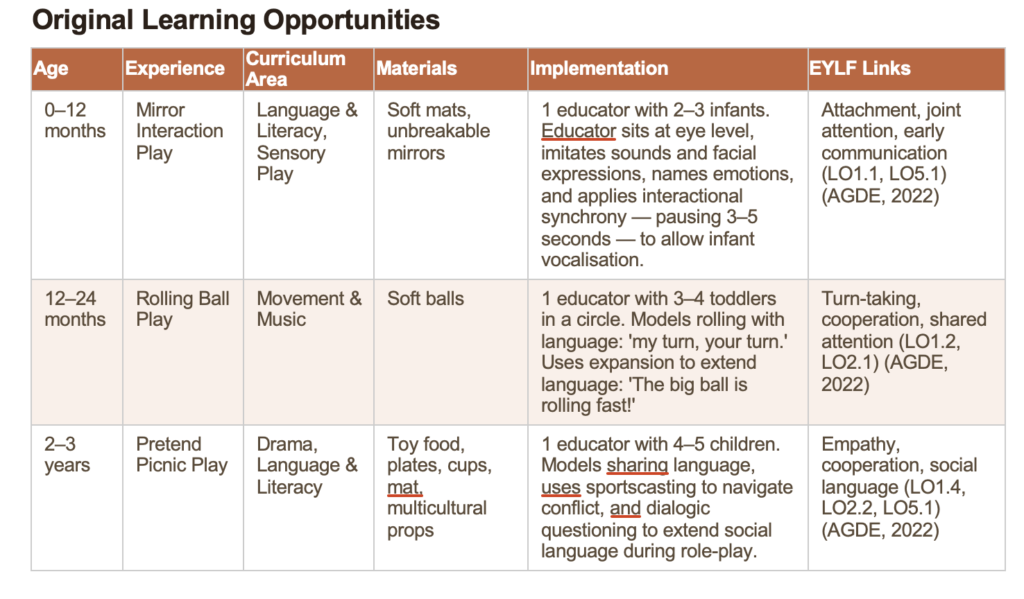
Social development progresses through recognisable stages in the first three years. Newborns engage in proto-conversations through eye contact, facial imitation, and vocalisation (Kearns, 2020). Joint attention emerges by six to nine months as a foundational precursor to language and empathy. Between 12 and 18 months, parallel play and social referencing reflect growing peer awareness, while by two to three years children negotiate roles and sustain cooperative play — though conflict remains normal as self-regulation develops (AERO, 2023; Dean et al., 2019). Educators who respond consistently to social bids and scaffold turn-taking, empathy, and cooperation across all curriculum areas are central to supporting this progression.
Teaching Competencies
• Responsive cue-reading: Noticing reaching arms, sustained gaze, or vocalisation communicates that social bids are valued. Interactional synchrony — a deliberate 3–5 second pause after mirroring infant coos — simulates conversation structure and supports early pragmatic development (Kaywork, 2020)
• Prosocial language modelling: Embedding ‘my turn,’ ‘gentle hands,’ and ‘thank you’ into daily flow teaches vocabulary of social negotiation (Dean et al., 2019)
• Sportscasting conflict: Narrating disputes without taking sides — ‘I can see you both want the red truck. What could you do?’ — builds self-advocacy while maintaining emotional safety (Masterson, 2018)
• Translanguaging responsiveness: Honouring home languages as a resource ensures all children experience genuine belonging (AGDE, 2022)
• Family partnership: Daily communication aligns social expectations between home and service (Arthur et al., 2024)