Domain Introduction
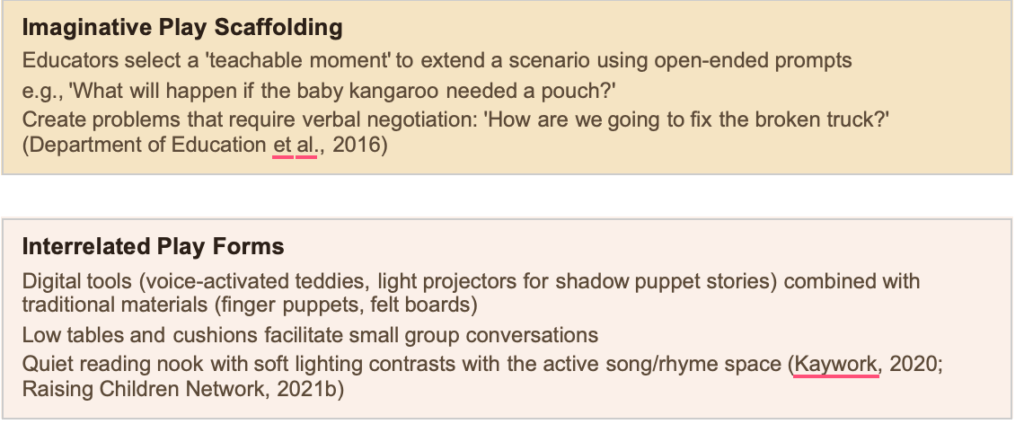
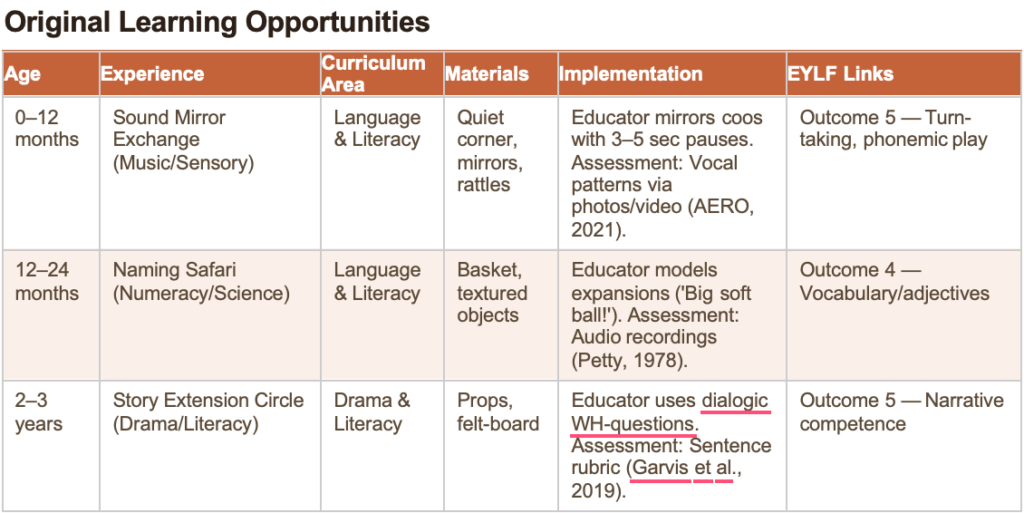
Language and literacy development provide infants and toddlers with important resources for communication, cognition and social relationships. Children may coo when they’re about 3 months; they may use 3-word sentences by 3 years. According to Vygotsky’s zone of proximal development (ZPD), children learn as capable individuals competent to take part in scaffolded interactions. Thus, competent educators may help develop vocalisations in infants into meaningful interactions (Garvis et al., 2019). Ecological models, as described by Bronfenbrenner, situate this within the proximal processes of caregiver-child interactions within culturally responsive environments (Department of Education et al., 2016).
According to the Department of Education et al. (2016), babies come into the world prepared for language. Even before their first words appear, usually around the age of about 12 months, they will listen to human voices and develop pre-verbal skills. Receptive language (understanding words) is more advanced than expressive language (using words) and therefore educators need to respond to the gestures and babbling until children begin to speak (Petty, 1978; Kaywork, 2020).
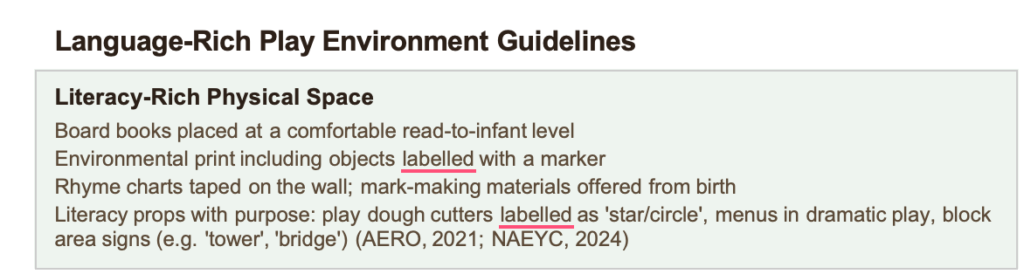
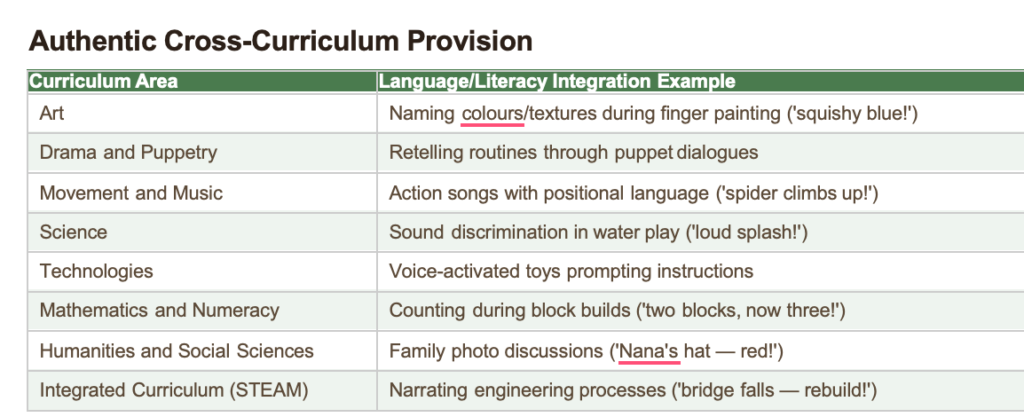
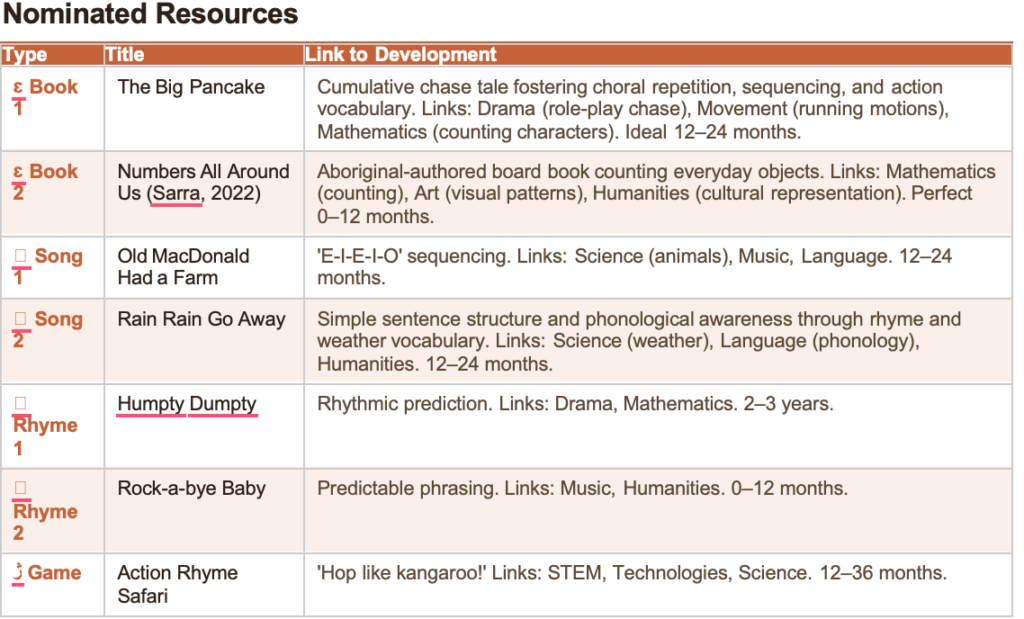
Early literacy begins with phonological awareness developed through songs and rhymes (Garvis et al., 2019), vocabulary gained by labelling objects during play (AERO, 2021), and narrative skills built through shared book reading (Raising Children Network, 2021b). Translanguaging, or using children’s home languages as well as English, is important in multicultural Australia for developing belonging and cognitive flexibility (Zheng et al., 2024). These activities align with EYLF Outcome 4 (confident learners) and Outcome 5 (effective communicators).
Teaching Competencies
• Intentionality: Rich environments alone are insufficient; adult involvement drives learning (Zero to Three)
• Attunement: Mirroring infant affect within ZPD alongside dialogic book reading using WH-questions (‘What happens next?’) positioning children as active storytellers
• Content knowledge: Knowledge of language structure (phonology, syntax, semantics) predicts outcomes better than experience alone
• Cultural competence: Mandates translanguaging responsiveness
• Documentation skills: Track pre-verbal cues through expansion strategies (‘ball go’ → ‘red ball rolls fast!’) (Dean et al., 2019; Weadman et al., 2021; Zheng et al., 2024)