Domain Introduction
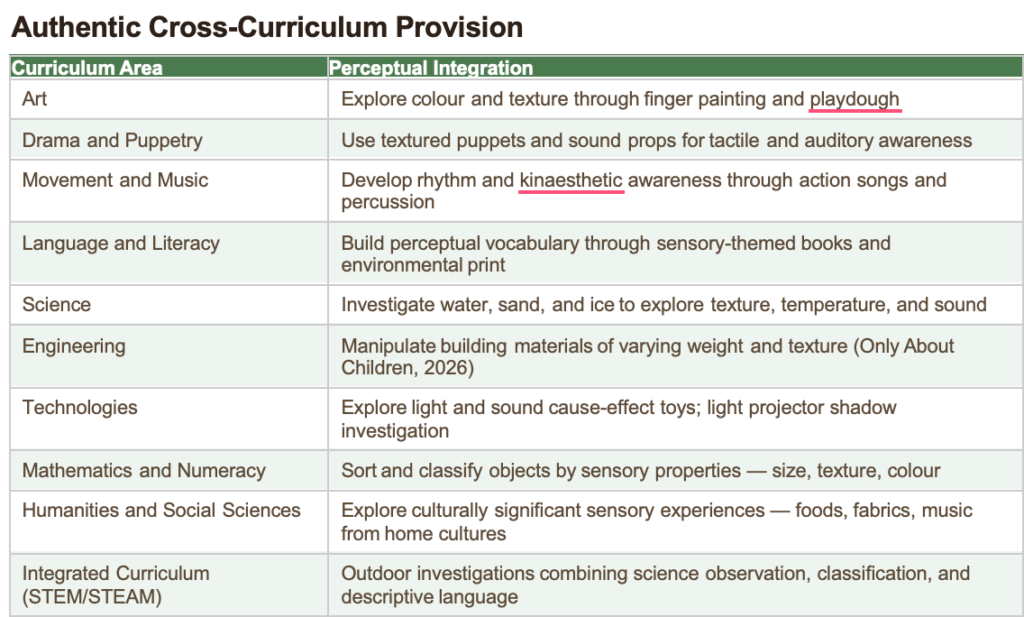
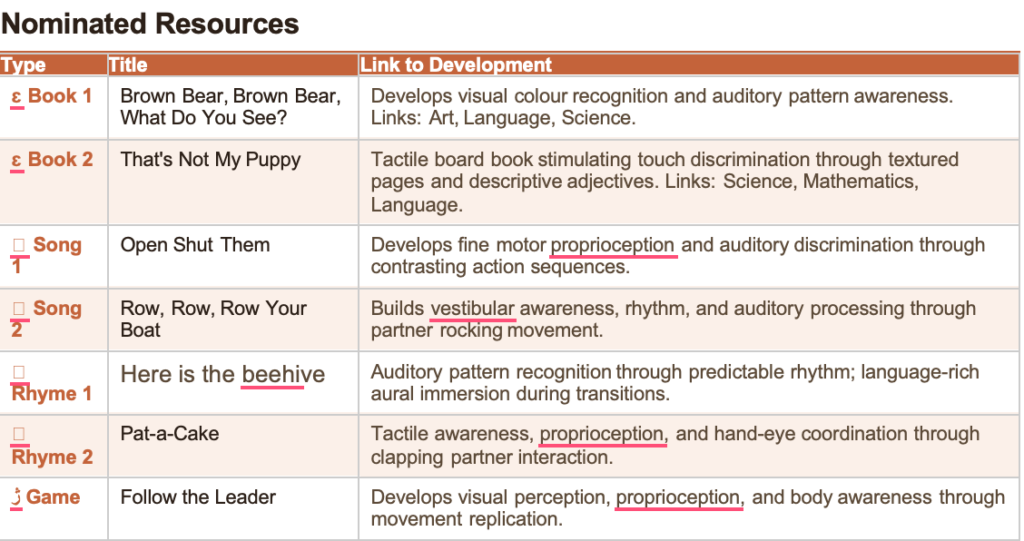
Perceptual development encompasses the processes through which infants and toddlers integrate their senses of sight, hearing, touch, taste, and smell to make meaning of the world. It is foundational to all early learning — brain development, cognitive growth, and concept formation are built upon repeated, varied sensory experience (Garvis et al., 2019; Kaywork, 2020). Beyond the classical five senses, proprioception and vestibular processing develop through movement and underpin spatial awareness and physical coordination. Perceptual development is inseparable from cognitive, language, and social domains, making sensory-rich curriculum provision essential across all areas.
Teaching Competencies
• Sensory observation: Monitoring children’s responses to stimuli to inform responsive, individualised provision (Dean et al., 2019)
• Multisensory scaffolding: Designing experiences engaging two or more senses simultaneously to accelerate neural integration (Garvis et al., 2019)
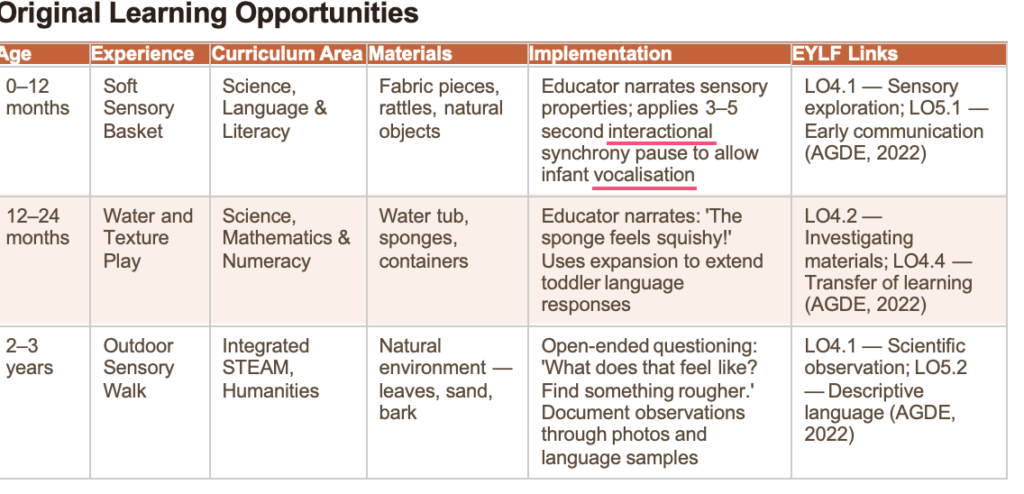
• Descriptive narration: Naming sensory properties in real time — ‘rough,’ ‘cold,’ ‘loud’ — building perceptual vocabulary alongside experience (Kaywork, 2020)
• Inclusive sensory planning: Recognising varied sensory processing capacities and offering both stimulating and calming options (DEEWR, 2016)
• Teachable moment responsiveness: Extending spontaneous sensory discoveries through open-ended questioning and expansion (AERO, 2021)